
The tightness in your chest that doesn't belong to you — and how to give it back
There is a particular quality to inherited emotional material that distinguishes it from what we have personally lived through: it doesn't…

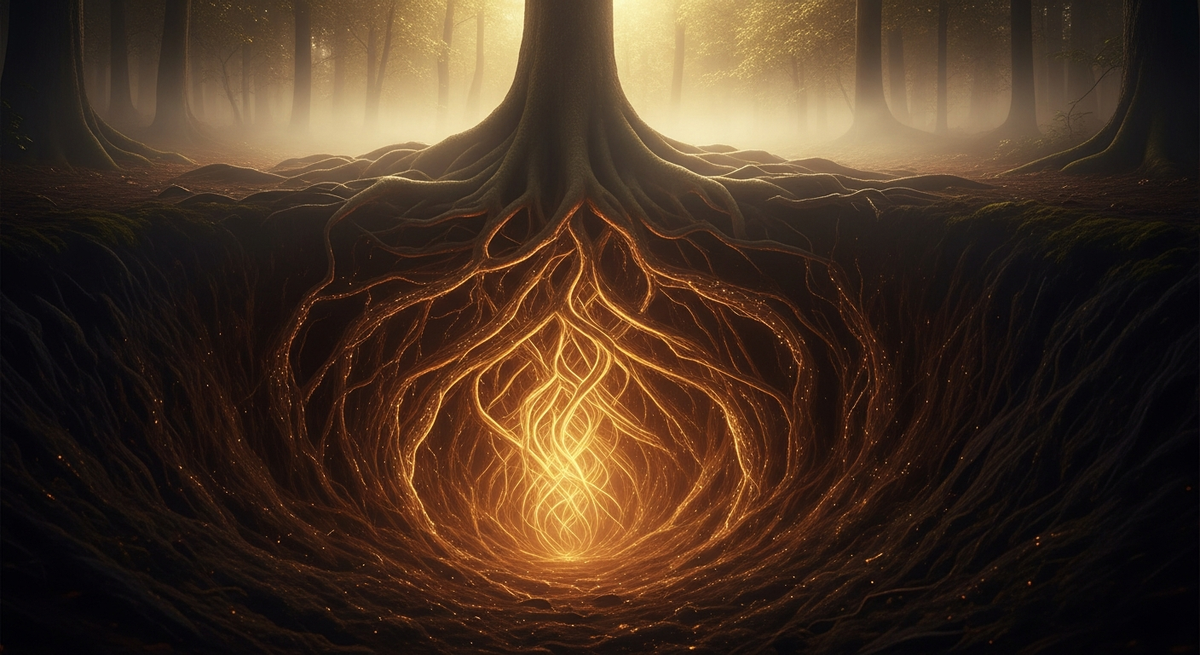
There is a particular quality to inherited emotional material that distinguishes it from what we have personally lived through: it doesn't quite fit. A grief that surfaces at odd moments and doesn't correspond to anything in this lifetime. An anxiety before social situations that has no traceable cause in your own experience. A rage in certain contexts that feels too large, too old, too precise to have originated with you.
What I have learned through both research and clinical practice is that much of this is held inheritance — emotions that were not processed in prior generations, settling into the nervous system as if they belong there, shaping response patterns in ways that feel like personality but are actually pattern. And the distinction matters, because what has been inherited can, with the right work, be returned. What is genuinely yours can be worked through. The two require different approaches.
Trapped emotions are physiologically real. The nervous system encodes unresolved emotional experience as physical holding patterns — tension, reactivity, chronic pain — rather than accessible memory. What cannot be consciously retrieved often remains active at the somatic level, continuing to drive behaviour long after the events that generated it have passed.
What the body has been storing
Bessel van der Kolk's research established the foundational case: trauma lives in the body. My doctoral work extended this into the ancestral layer, examining how the nervous systems of subsequent generations can carry the imprint of experiences they never personally lived through. The physiological signatures — elevated baseline cortisol, disrupted immune function, persistent muscular tension — appear regardless of whether the person knows the origin of what they carry.
Intellectual understanding of why you respond as you do rarely changes the response itself. The holding is below the level of narrative, and narrative alone cannot reach it. This is frustrating for people who have done significant intellectual work on their histories and wonder why the body hasn't received the memo.
How to find what has been stored
Ancestral trauma affects us through nervous system encoding: the unresolved experiences of prior generations are transmitted as physiological holding patterns, emotional reactivity, and behavioural tendencies that feel native but originate elsewhere. Healing begins with identifying where those patterns sit in the body, then using somatic, ceremonial, and breathwork practice to complete what was left unfinished.
The body scan — slow, attentive movement of awareness through the body from head to feet, noting where contraction, weight, or unease sits — is the most reliable method I use for locating stored material. The body communicates with precision when given the silence to do so. In the ancestral layer, the holding often sits in specific places: the sternum, which tends to carry grief; the throat, which holds what could not be spoken; the lower belly, which can carry a family's accumulated shame or fear. Directed writing alongside the scan — not abstract journalling but questions aimed at specific sensation, asking what a particular tightness is bracing against — can bring into language what the scan alone leaves wordless.
Pattern observation is where the ancestral dimension becomes most legible. When the same emotional charge appears across generations, when the trigger seems disproportionate to the present situation and echoes a family theme you recognise, you are often not dealing with personal history alone. That recognition alone — "this doesn't quite fit my life" — is the beginning.
If this is landing for you — if you can sense material that doesn't quite trace to your own biography — a free twenty-minute conversation is the most direct way to explore it. Book here.
How to release what has been held
Body-based practice releases what body-based holding stores. Somatic movement — yoga, instinctive physical movement, anything that allows the body to discharge without performing — lets the tissues complete what was interrupted. I have worked with clients who could not locate the origin of their chronic tension through any amount of conversation, but found it shift markedly after sustained somatic work, once the body had permission to move as it needed rather than as it was directed. The discharge can feel strange — an unexpected wave of emotion, a quality of grief that isn't quite sadness — and that strangeness is often a sign that what is moving is old.
EFT tapping, applying gentle acupressure to meridian points while naming the emotion honestly, interrupts the feedback loop between emotional memory and present reactivity. The naming matters: it signals to the nervous system that the emotion has been witnessed, which is often what allows it to complete its cycle. "Even though I carry this ancestral fear" — spoken aloud, with specific and honest language — begins the renegotiation.
Ritual offers something somatic work doesn't: a clear marker of closure that the conscious mind registers. Writing what you are releasing and burning it with deliberate intention is not symbolic performance — it is a form of completion the psyche responds to as directly as any physiological intervention. The work I do in constellation sessions often ends this way: something named, something returned, something witnessed. The ceremony makes the completion legible.
These practices work cumulatively rather than dramatically. A daily check-in — noting what you are carrying at the start and end of each day — keeps the maintenance current rather than allowing material to accumulate until it demands attention.
The work of releasing ancestral trauma and developing the somatic awareness to identify it overlap significantly — both require learning to read the body's signals rather than only the mind's narrative. I've written about the complementary dimension of this in the piece on identifying and working with what the body already knows.
The past is not sealed off from the present. But it can be metabolised, and the body is where that metabolism happens.
Your Lineage Ends Here. Your Healing Begins Now.
Is there an emotion or response pattern in your life that has always felt slightly too large or too specific to have originated entirely with you?
Dr Mark Demaine works with clients internationally. If you're ready to explore this work, book a session here. His doctoral research examined ancestral trauma transmission through epigenetic, psychological, and environmental pathways. He combines shamanic lineage work with somatic and breathwork practice. Read more about Mark.
