The first step nobody tells you about in nervous system healing
There is a sequence problem in how nervous system healing is commonly presented, and it accounts for a significant proportion of the cases I…

There is a sequence problem in how nervous system healing is commonly presented, and it accounts for a significant proportion of the cases I…
Depression runs in families. This is one of the most well-documented findings in psychiatric research, with heritability estimates for major…

Soul retrieval is a shamanic tradition with many forms. Here is what it is understood to be, what happens in and after a session, and how to find a legitimate shaman who is open about training, consent and pace.
The language of sacred agreements makes some people uncomfortable, and I understand why — it can sound as though individual suffering is…
The two can look alike and can overlap, and no article can tell you which one you are living through. This guide sets out what people notice, a calmer way to think about it, and who to ask for what.

Spiritual guidance should leave you more able to think for yourself, not less. Here is what it is, how it differs from therapy, and the questions that help you choose well.
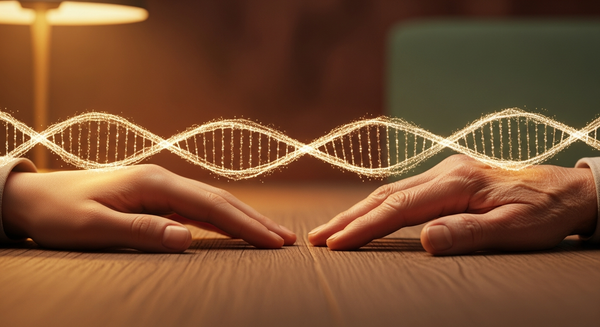
It is easier to speak about inherited suffering than inherited suppression of wellbeing. The clinical and cultural conversation around…

One of the questions clients sometimes ask, though rarely directly — because it feels uncomfortably close to comparison, and comparison feels…
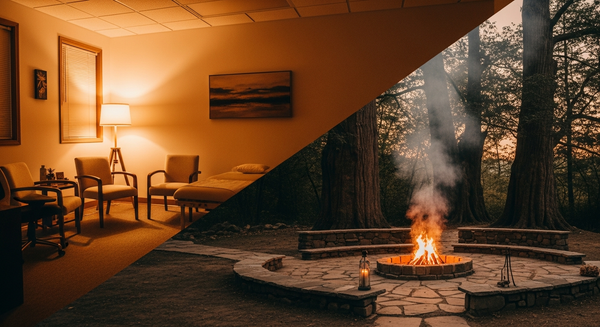
The question I'm asked most often by people who have a good relationship with their therapist and are considering adding lineage work is…

You release inherited family trauma from the body by working with the body directly, not only by understanding it. Slow, guided practices such as breath, gentle movement and tracking sensation let the nervous system finish responses it never completed. Release is usually gradual, and some patterns are carried at the

Unexplained fear may be generational when it began before your own difficult experiences, sits in the body with no memory attached, flares in situations unlike anything in your history, and shows up in other family members too. These are signs, not a diagnosis. One sign proves little; several together suggest

Can you inherit anxiety and trauma from your grandparents? What the science actually says Your grandmother's fear doesn't need a conversation to reach you. It travels through something older than language — the same mechanism that encodes survival adaptations and passes them to the next generation before
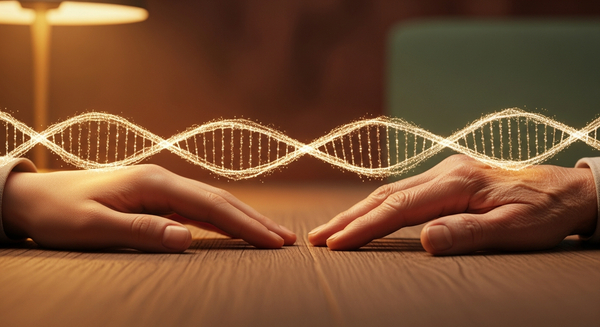
Subconscious ancestral loyalty: why you repeat what you never consciously agreed to You don't decide to repeat your family's patterns. You discover — often much later than you'd like — that you already have. The patterns that run below conscious access don't respond to

Where ancestral trauma lives in the nervous system — and how to read its signals The nervous system is not a biography of your own life. It is also a record of lives it never lived, fears it never faced, and survival states it was calibrated to run as a precaution.

You stop repeating your mother's relationship patterns by recognising that they live in your nervous system and in loyalty to her, not in a lack of willpower. Deciding to be different is not enough. The pattern loosens when you notice your body's automatic response, name what

There is a particular kind of exhaustion that has nothing to do with your own life. You wake up with it. You carry it through the day without being able to point to a cause. After family gatherings — even perfectly pleasant ones, nothing happened, no argument, no difficult conversation — a

Identification is a psychological term that gets used loosely. In the context of family systems work, it has a specific meaning — and understanding that meaning is often the first moment a person recognises why they are living out patterns, fates, and emotional loads that were never theirs to carry in

The word "epigenetic" has entered wellness vocabulary as shorthand for "your parents' experiences affected you more than you realise." That's true. It is also far too vague to be useful. The actual mechanisms are more specific, more interesting, and considerably more important — because

There tends to be, in families with significant ancestral trauma, one person in each generation who feels the weight of the whole system.…
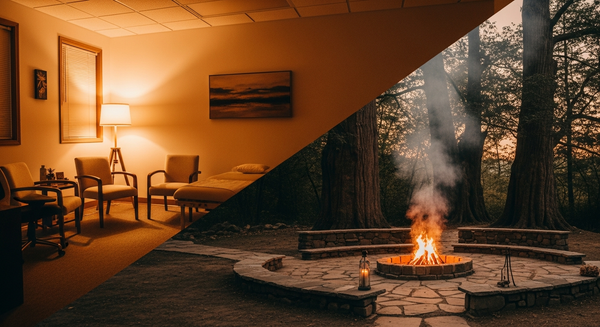
The conversation about nervous system regulation has, over the last decade or so, moved substantially into mainstream therapeutic culture —…
Attachment theory has given us a useful language for understanding how early relational experience shapes the template we carry into adult…
There is a clinical observation I return to often, because it confounds people who arrive with genuine motivation to heal and then discover,…

There is a persistent assumption in some therapeutic circles that understanding is the active ingredient in healing — that if the person…

Something has shifted. More men than ever are actively choosing to face the father wound — the unspoken inheritance that shapes how they love, lead, and live. Here is what the wound is, why it stayed hidden so long, and what healing it actually looks like.